Overload
Dehumanization and the Healer's Touch

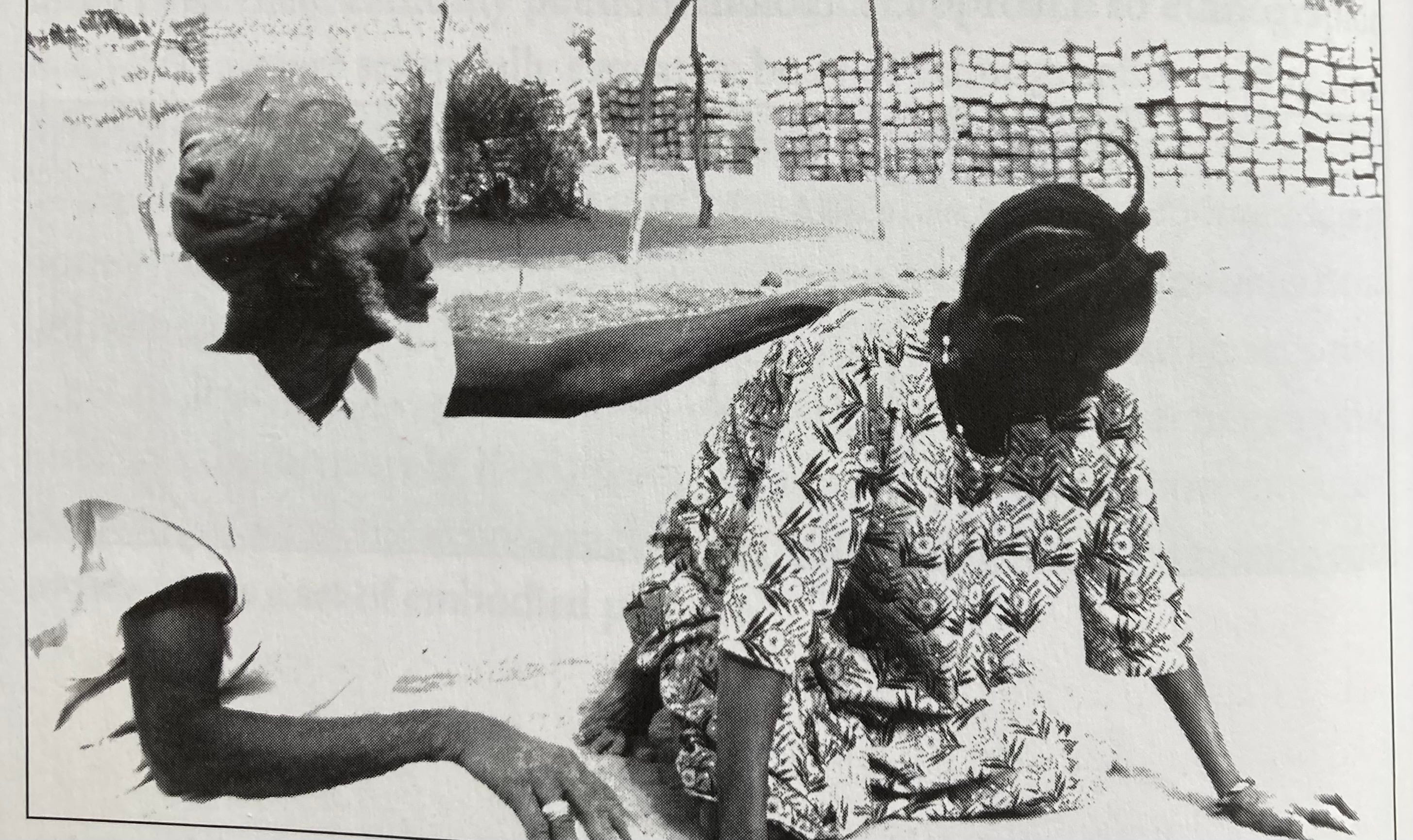
Adamu Jenitongo’s Healer’s Touch in Tillaberi, Republic of Niger
Photo by Paul Stoller
If we live long enough, all of us will visit medical facilities, either as a patient or a visitor to friends and family. Most of these facilities look very much alike: sterile walls, fluorescent lighting, gleaming corridor floors, and waiting rooms filled with anxious people. When we find ourselves in such a setting, particularly in a hospital, we are filled with angst. We worry about ourselves or our loved ones. Our hearts beat faster, our palms become sweaty. As we sit on uncomfortable chairs waiting to be called, some of us try to breathe deeply in an effort to tap our reserves of calming energy.
Eventually someone calls our name. Sometimes this person pauses, greets us, or smiles; other times they call your name and walk ahead of you without acknowledgement. You are taken to a small room. An aide takes your “vitals:” blood pressure, pulse, blood oxygen levels, height, and weight. Eventually you return to the waiting room.
“They will call you soon.” The aide walks away to call the next patient.
After more anxious waiting, a person dressed in blue scrubs walks into the waiting room and loudly mispronounces your name. They take you to another small room with an assortment of instruments and three empty chairs. You try to decide where to sit and eventually sit in one of them. This time you are waiting to hear about test results and your prognosis. You are waiting for words that will determine your future. Will there be a new course of medication? Will your treatment plan involve painful side effects? Is there hope for you? Will you live or die? Mired in these existential thoughts you feel invisible.
When the physician finally arrives, you shake hands and exchange greetings, a ritual that Bronislaw Malinowski, one of the founding “fathers” of anthropology, called “phatic communion.” It is a ritual act that perfunctorily establishes a connection between two human beings. You exchange pleasantries. Although this ritual is designed to acknowledge you as a person, it does not reduce your anxiety. The physician logs into their computer and examines the screen. With each click of the keyboard, your anxiety increases as your medical life history appears on the screen: previous conditions, scans, treatment outcomes, and surgeries.
“I see your latest test results.” The physician looks up, finally making eye contact. “I think we need more blood tests, which I’ll order now.” You listen to the click-clack of the keyboard. “Do you have questions?”
You have many questions, but your discomfort makes you want to end the ordeal. “No,” you say quickly.
“Excellent. Please go to the front desk to set up your next appointment.” The doctor stands up, walks toward the door and says, “Have a good day.”
This vignette represents a scenario that occurs in thousands of medical facilities across the US. In my most recent visit, the entire interaction took approximately 15 minutes. The physician did not look or touch me other than our initial handshake. As I wandered out to the waiting room to arrange follow-up appointments, I wondered what had happened to the healer’s reassuring gaze or the healer’s soothing touch?
My experience is not unique, but there are exceptions to these institutional patterns. In my books and blogs, I have written about the excellent humanistic care I received when, years ago, I underwent cancer treatment.Many amazing physicians actually look at the human beings they are talking to and listen to them with patience and compassion. Unfortunately, these healers are becoming more difficult to find. Whether it is a family physician’s office, a walk-in clinic, a rural hospital, or even a world-class medical facility, the rules are similar. Guidelines dictate computer-focused interventions and short appointments. Physicians and physicians’ assistants usually have roughly 15 minutes to “process” their patients. That processing also means that a window of limited time may well be taken up recording vitals, evaluating data on the screen, tapping the keyboard to send in prescriptions, and maybe a few moments for additional conversation. There is little time left for patients to tell their stories, narratives that might uncover a new condition or lead to a new diagnosis. The time span certainly is not long enough to establish bonds of social trust.
Like most institutions in the United States, medicine has become more technologized. Medical data are processed in portals that patients can access to make appointments, contact their medical team, view test results, take notice of upcoming appointments, request evaluations of professional performance, and pay medical bills. These processes, of course, are complicated exponentially by the murky world of medical insurance corporations, which approve or deny coverage of office visits, medication requests, emergency care, blood work, outpatient procedures (MRI Scans,, CT Scans, and PET Scans), inpatient procedures, and medications, all of which lead to calculating the often surprisingly expensive cost of providing health care. According to a 2024 report of the Consumer Financial Protection Bureau (CFPD), 100 million Americans owed $220 billion in medical debt, which, given the draconian cuts to the Affordable Care Act and to Medicare and Medicaid, is a number that will no doubt increase in 2026. These debts very often result in devastating bankruptcies, which, in turn, profoundly disrupt, if not destroy, personal and professional relationships. They also erode our social trust in health care institutions.
The technological ramifications of medical practices are one example of broader and more profound processes of dehumanization. In the age of AI, dehumanization has become more pervasive and invasive. The dehumanizing aspects of medical care are perhaps the most difficult to bear. They occur during vulnerable times when we are sick and are desperately seeking medical help that is largely available through “digital portals.” What about the millions of patients who do not have access to “digital portals,” who lack computer literacy, or haven’t the financial means to purchase the latest technology? Millions of older Americans, immigrants, and marginalized groups of people who cannot manage technologized medical systems and procedures. They are doubly dehumanized.
As my recent experience indicates, contemporary health care often sacrifices meaningful human connection in favor of efficiency, documentation, and data management. While there are valid reasons for some of these processes, most medical encounters tend to be constrained by short appointment times, an average of 15 to 20 minutes, and the demands of electronic record-keeping. As a result, patients like me have limited opportunities to share our stories, fears, and anxieties. These are narratives that can be important for more accurate diagnosis and more effective treatment.
Is there an option for the millions of Americans who long for a more humanistic approach to health care? I have been exploring this question in my recent work on social well-being. Some healers prioritize listening, empathy, and the elicitation of narratives. In my next blog post, I take an anthropological view of narrative medicine and examine the practices of healers who have helped to shape a more humanistic and patient-focused approach to health care.
.
“
\
I did not remember “phatic communion” from Malinowski - helpful idea. I think it is also used by highly skilled salespeople, and ethnographers!